Decluttering checklist: room by room, in 15-minute steps
A room-by-room decluttering checklist cut into areas you can finish in about 15 minutes, with what to take out of each, a 30-day order, a quick version for busy days, and a way back in after a gap.
The short answer
A good decluttering checklist splits your home into small areas you can each finish in about 15 minutes, like one drawer or one shelf, and says what to take out of each. Start with rooms that hold few keepsakes (the bathroom, the entryway, the pantry), do one area a day, and leave sentimental things for last.
How to use this checklist
A list of every room can look like a month of weekends. This one is built to be done in small pieces, so you can stop any day and still have something finished.
- Do one line at a time. Each line below is one area: small enough to finish in a round of about 15 minutes, with nothing left in a pile.
- Set up three bags first: trash, donate, and "elsewhere" for things that belong in another room. The elsewhere bag stops the detour where you carry one item to the bedroom and start on the bedroom.
- Take out only the easy things. Broken, expired, empty, duplicates, things you know you don't use. If you're unsure, it goes back for now. A drawer that's half as full is a real win.
- Stop when the timer ends. Even if you feel like going on. Stopping while it still feels fine makes the next round easier to start.
- Finish the round. Trash out to the bin, donations by the door or in the car, the elsewhere bag put away in one trip.
Decluttering and organizing are two jobs. Today is only for taking things out. Bins, labels and new systems can wait until there's less to organize.
The decluttering checklist, room by room
Copy these tables into a note or a document, print them if you like paper, and cross off one line a day. The minutes are a rough guide; your home sets the real ones.
Entryway
| Area | What to take out | Minutes |
|---|---|---|
| Shoes by the door | Pairs that hurt, are worn out, or you haven't worn in a year | 15 |
| Coats and hooks | Coats nobody wears, bags you don't use, extra hangers | 15 |
| Keys, mail and the drop spot | Old mail, flyers, receipts, keys you can't name | 10 |
Kitchen
| Area | What to take out | Minutes |
|---|---|---|
| One counter | Anything that doesn't get used each week, things that belong elsewhere | 15 |
| Pantry, one shelf at a time | Expired food and spices, open packets nobody will finish | 15 |
| Food containers | Lids without a box, boxes without a lid, stained or warped ones | 15 |
| Utensil drawer | Duplicates, takeout cutlery, gadgets you never reach for | 15 |
| Mugs and glasses | Chipped ones, freebies, more than your household uses | 10 |
| Under the sink | Empty or dried-up cleaning products, old sponges, extra bags | 15 |
| Fridge and freezer | Expired food, old sauces, mystery containers | 15 |
Bathroom
| Area | What to take out | Minutes |
|---|---|---|
| Counter | Empty bottles, things you don't use daily | 10 |
| Cabinet or drawers | Expired products, old makeup, samples, hotel toiletries | 15 |
| Shower | Empty bottles, worn-out razors and sponges | 10 |
| Towels and linens | Frayed towels, more than your household uses | 15 |
Bedroom and closet
| Area | What to take out | Minutes |
|---|---|---|
| Nightstand top and drawer | Old receipts, dead pens, cables for devices you no longer own | 15 |
| Dresser top | Anything that isn't used there, things that belong elsewhere | 10 |
| One dresser drawer | Socks without a pair, worn-out underwear and T-shirts | 15 |
| Closet, one section | Clothes that don't fit, that you never reach for, or that need a repair you won't make | 15 |
| Under the bed | Things you forgot were there, empty boxes | 15 |
| Bedding | Sheets with no matching set, spare pillows nobody uses | 10 |
For the closet, one easy test: if you saw it in a store today, would you pick it up? If not, it can go.
Living room
| Area | What to take out | Minutes |
|---|---|---|
| Coffee table | Mail, old magazines, things that belong elsewhere | 10 |
| One bookshelf | Books you won't read or reread, old DVDs and games | 15 |
| Cables and remotes | Cables for nothing, remotes for devices you no longer have | 15 |
| Decor | Pieces you no longer like, broken frames | 15 |
Desk and papers
| Area | What to take out | Minutes |
|---|---|---|
| Desk surface | Everything that isn't used there | 15 |
| One desk drawer | Dried-up pens, old chargers, loose screws and clips | 15 |
| Paper pile | Junk mail, expired coupons, manuals you can find online; shred anything with personal details | 15 |
Laundry, storage and garage
| Area | What to take out | Minutes |
|---|---|---|
| Laundry shelf | Empty bottles, single socks waiting for a match | 10 |
| One storage box | Things you didn't know you had, empty packaging | 15 |
| One garage or closet shelf | Broken tools, old paint, gear for hobbies you've let go | 15 |
Sentimental things, last
| Area | What to take out | Minutes |
|---|---|---|
| One keepsake box | Keep the pieces that matter most; take a photo of what you're ready to let go | 15 |
Sentimental things go last on purpose. By the time you get to them, you'll have had many rounds of easy decisions, and these feel lighter.
A 30-day decluttering plan
If you'd rather follow a set order, here is one area a day for a month, easiest rooms first, with one free day a week:
- Week 1, the easy start: bathroom counter, bathroom cabinet, shower, shoes by the door, coats and hooks, the mail spot. Day 7 is free.
- Week 2, the kitchen: one counter, the pantry, food containers, the utensil drawer, under the sink, the fridge. Day 14 is free.
- Week 3, bedroom and closet: the nightstand, one dresser drawer, two closet sections, under the bed, bedding. Day 21 is free.
- Week 4, living room and desk: the coffee table, one bookshelf, cables and remotes, the desk surface, one desk drawer, the paper pile. Day 28 is free.
- Days 29 and 30: one storage box, then one keepsake box.
A free day is part of the plan, not a break from it. If a week runs long, the next area simply waits for you.
A quick declutter checklist for a busy day
Only 15 minutes, or guests on the way? Do these in order and stop when time runs out:
- Take out the trash and recycling.
- Clear the kitchen counter and the coffee table into the elsewhere bag.
- Put shoes and coats where they live.
- Toss the mail you don't need.
- Empty the elsewhere bag in one trip.
That isn't decluttering yet, but it clears the surfaces you see most, and a clear surface makes the next real round easier to start.
Easy things to let go of in any room
When you're not sure where to start in a room, look for these first. Each one is a quick decision:
- Anything broken that you won't repair
- Expired food, spices and products
- Empty bottles and packaging
- Duplicates of things you use one of
- Freebies, samples and promotional items
- Cables and chargers for devices you no longer own
- Clothes that don't fit or that you never wear
- Old mail, receipts and manuals
- Containers without lids, lids without containers
- Gifts you kept only out of guilt
Decluttering before a move? The moving checklist puts it in the first weeks, so there's less to pack.
Once the clutter is gone, a weekly cleaning schedule of one area a day keeps the surfaces clear.
Using a decluttering checklist with ADHD
The checklist above works for anyone, but it was built with a few things in mind that many people with ADHD describe.
Looking at the whole room is what freezes you, not any one item. So look only at today's line. The rest of the list is there so you don't have to decide tomorrow, not to be read every day.
A big session leaves a bigger mess. It runs long, leaves a half-sorted pile on the bed, and makes the next session feel heavier. The stop rule and the small areas are there so you always finish.
Low-energy days still count. The round can be five minutes, or one surface. Some days the goal is a room that feels cozy enough, not one that's clean.
After a gap, don't catch up. After days away, there's nothing to make up. Pick the smallest area left on the list, do one round, and stop. The plan simply continues from today.
For organizing tasks and time rather than things, see ADHD organization. If you're stuck before the first round, how to start a task covers the first minute.
Make your own checklist with ChatGPT
Every home is different, and a checklist written for your rooms is easier to follow. Many people who plan with ChatGPT pour everything in, then ask it to break it down until each piece feels doable. For a decluttering checklist:
Make me a decluttering checklist for my home. Here are my rooms
and what's in them: [describe them].
Split each room into areas I can finish in about 15 minutes.
Start with the rooms with the fewest keepsakes. For each area,
say what to take out first. Put it in a table.
Depending on your ChatGPT plan, you can also add a photo of the area with the + button in the message box. Some people find a photo easier than describing the mess. It's your call what you share: a photo can show more of your home than the clutter, so crop it first if you prefer.
To turn the checklist into a schedule:
Turn this checklist into a plan of one area a day, starting today.
Leave one day a week free. Put sentimental things last.
On a low-energy day:
My energy is low. What's the smallest decluttering step I could do
in five minutes that still counts? One line.
ChatGPT can sound sure and still be wrong about how long something takes, so treat its minutes as a guess and trust your own sense of your home. Once you have today's area, close the chat and do it. If keeping a plan going is the hard part, how to use a planner with ADHD has a restart rule that works for any list.
Everything above works on paper too. A printed list on the fridge and three bags are enough.
How Petipa helps with a decluttering plan
A checklist of one area a day only works if you can find your place in it. A list in a chat scrolls away, and after a week away, rereading it feels like starting over.
Petipa is an app inside ChatGPT that keeps a plan like this and shows you one small step at a time. ChatGPT helps you make the checklist; Petipa remembers it after the chat is closed, and never stores your conversations. A photo you share goes to ChatGPT to make the plan, not to Petipa. Here's how it works:
- Make the decluttering checklist with ChatGPT, adjust it, then say "save it to Petipa".
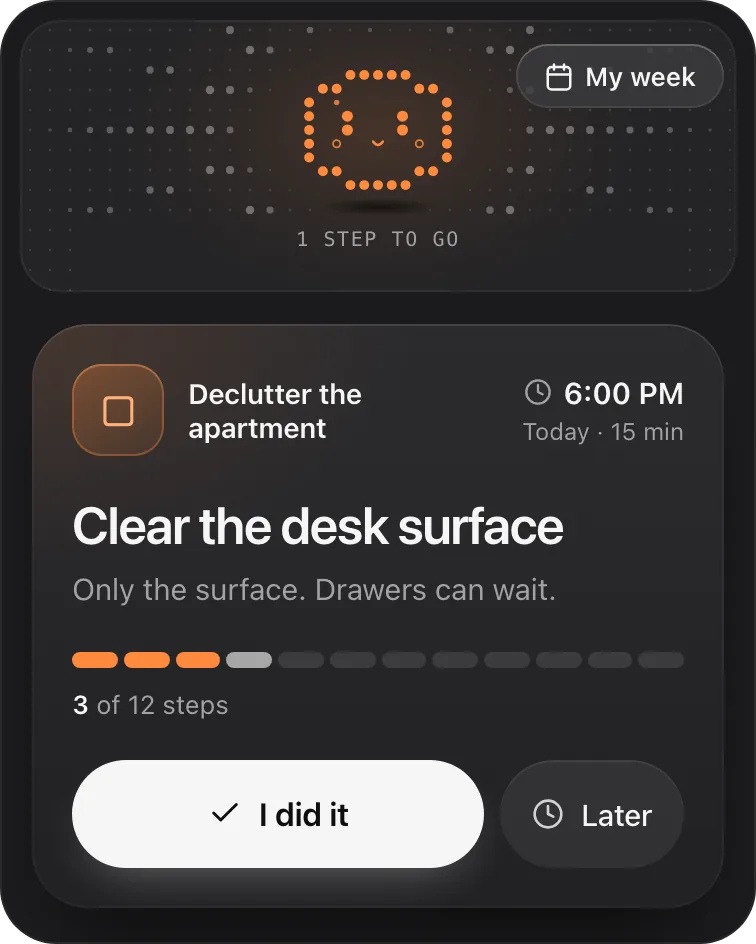
- Each day, ask "@Petipa what's my step today?". You see one area with its minutes, like "Clear the desk surface, 15 min".
- Tap I did it when the round is done, or Later if today isn't the day. My week shows what's done and what's next this week.
Away for a while? Nothing is lost, and there's no streak to break. Petipa welcomes you back calmly and you pick up from today. If the plan needs to change, Petipa asks before it changes it.
What it doesn't do: Petipa doesn't sort your things or tell you what to keep, it isn't a printable, and it sends no reminders, so you start the check-in yourself. Some people set a daily phone alarm that says "ask @Petipa what's my step today?".
Petipa is in ChatGPT's plugin directory.
Enter a valid email.That didn't go through. Try again in a moment.
Add to ChatGPTQuestions
What should be on a decluttering checklist?
Every room split into small areas, like one drawer, one shelf or one counter, with what to take out of each: broken, expired, empty, duplicate and unused things. A good checklist also gives an order, easiest rooms first and sentimental things last.
What order should I declutter my house in?
Start with rooms that hold few keepsakes and quick decisions, like the bathroom, the entryway and the pantry. Then the kitchen, the bedroom and closet, the living room and papers, and sentimental things last.
How long does it take to declutter a whole house?
It depends on the size of your home and how much is in it. One 15-minute area a day adds up, and it's a pace that's easier to keep than a weekend marathon.
Is there a printable decluttering checklist?
You can copy the tables on this page into a document and print them, or ask ChatGPT to make a checklist for your own rooms in a table you can print. Cross off one line a day.
How do I start decluttering with ADHD?
Pick one area you could finish in 15 minutes, like a drawer or a counter. Put a trash bag, a donate bag and an "elsewhere" bag in the room, take out only the obvious things, and stop when the timer ends.
What if I stop decluttering for a while?
Nothing needs catching up. Start again with the smallest area left on your checklist, do one round, and stop there.
Can ChatGPT make me a decluttering checklist?
Yes. Describe your rooms, or add a photo depending on your plan, and ask ChatGPT to split each room into 15-minute areas with what to take out first. You still decide what to keep.