How to track goals with ChatGPT without starting over
Track a goal with ChatGPT the light way: an outcome, a measure you can update in seconds, a weekly review, and one next step instead of a new plan every day.
The short answer
To track goals with ChatGPT, keep one clear outcome, a short progress log and a weekly review. Don't ask for a fresh plan every time. Tell ChatGPT what you finished and what changed, let it update where you stand, and leave with one next action. Save a one-line checkpoint so a new chat can pick up.
Separate the goal from the plan
A goal is the outcome: read one book this month. A plan is the set of actions that may get you there: pick the book, read ten pages, find two free evenings, and adjust when life happens.
If you ask ChatGPT for a brand new plan every day, it can still help you think, but you lose the sense of moving forward. Track the outcome and the evidence of progress, and let the plan change underneath them.
A simple three-part goal tracker
| Field | Example |
|---|---|
| Outcome | Finish one book by November 30 |
| Evidence | Pages read: 42 of 240 |
| Next step | Read 5 pages tonight, 10 min |
This works for reading, studying, a fitness habit or a side project. Pick a measure you can update in a few seconds. If tracking takes longer than the step, the measure is too detailed. To set the goal in the first place, the ChatGPT goal setting prompt sizes it to the time you really have.
Copy this ChatGPT goal tracking prompt
Help me follow one goal over the next month.
Goal: [outcome and target date]
Where I am now: [current state]
Time I can give it: [realistic weekly time]
Constraints: [work, energy, schedule]

Make a light first week with small steps.
Give me one action for today, with its estimated minutes.
When I report progress, summarize:
- what I finished
- where I stand
- the next small action
Don't make a new plan unless I ask, or the goal no longer fits.
Before you end each session, save a one-line checkpoint like this:
Goal: finish the book. Progress: page 42. Next: read pages 43 to 47 on Thursday evening.
Paste it when you come back. It works even in a brand new chat, because everything ChatGPT needs is in that one line.
A five-minute weekly review
Once a week, take stock:
Review my goal in five lines at most.
Here's what I finished: [list or checkpoint].
What changed: [constraints].
Tell me: 1) where I stand, 2) one obstacle, 3) a smaller next step,
4) what can wait. No catch-up schedule.
A useful review changes the next action, not how you see yourself. If the week went well, keep going. If it didn't, make the next step smaller.
After a week off
Don't stack up the steps from the days you were away to make up for them. Ask ChatGPT to move or drop what no longer fits, then pick something doable today. If the plan was built for 45 minutes a day and you now have 10, change the plan rather than keep a target you won't reach. How to resume a ChatGPT plan has a restart prompt for exactly this.
How Petipa helps you track a goal
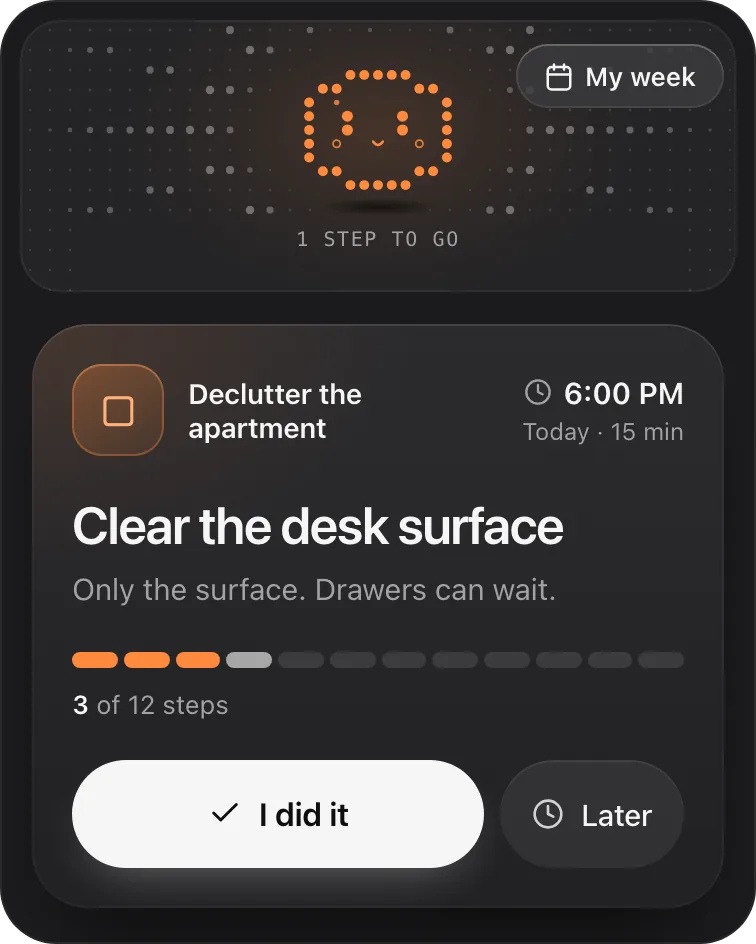
A checkpoint is free and works well, but it's one more thing to keep up. Petipa is an app inside ChatGPT that keeps the plan for you. ChatGPT helps you make the plan; Petipa remembers it after the chat is closed, records the steps you finish, and never stores your conversations. Here's how it works:
- Make the plan with ChatGPT, then say "save it to Petipa".
- When you're ready, ask "@Petipa what's my step today?". You see one step with its minutes.
- Tap I did it when it's done, or Later if today isn't the day. My week shows what's done and what's next this week.
Away for a few days? Nothing is lost. Petipa welcomes you back and you pick up from today. If the plan needs to change, Petipa asks before it changes it.
What it doesn't do: Petipa sends no reminders or notifications, so you choose when to ask. It tracks the steps you mark done; it doesn't measure pages, hours or other numbers for you.
Petipa is in ChatGPT's plugin directory.
Enter a valid email.That didn't go through. Try again in a moment.
Add to ChatGPTQuestions
Can ChatGPT remember my goal?
It may keep relevant context, depending on your memory settings, but that isn't an exact record of what you finished. For accuracy, keep a one-line checkpoint or use a tool that stores the plan.
What's the best way to measure progress on a goal?
Pick one measure you can see: pages read, practice sessions done, sections written. Avoid tracking so many numbers that the tracking becomes the work.
Should I start over after a week off?
Usually not. Check whether the goal and your time still fit, then carry on with a smaller step or a revised schedule.